
Games for Dementia Patients
For adultsFive things to do together on a tablet, none of which can be got wrong: find the same picture, a gentle game of pairs, sorting by kind, prompts for remembering out loud, and a circle to breathe with. Large print, no timer, no score. Below the games: which suit each stage, how to play alongside someone, and fifteen games to do at home without a screen.
Find the same picture.
Find this one
Tap the same one
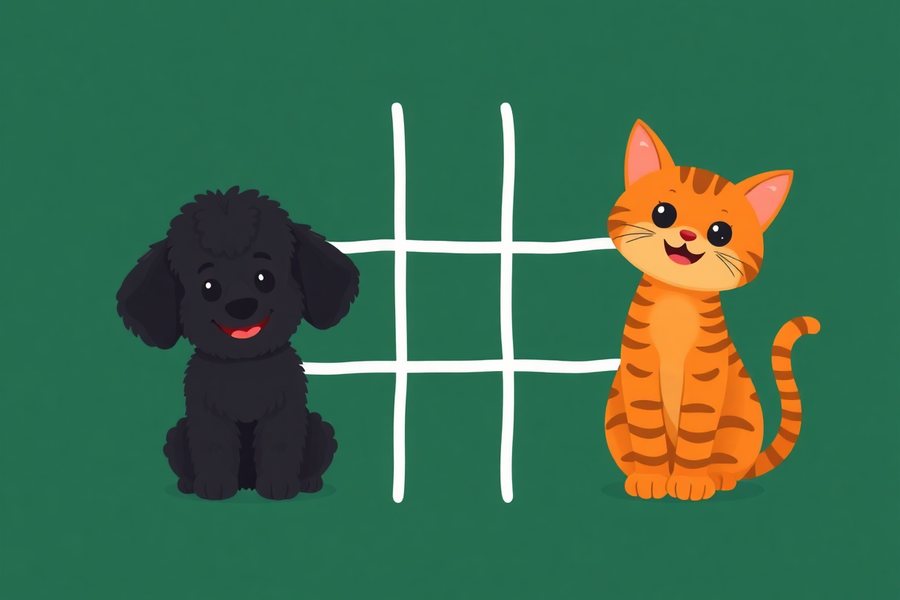
Tap all the animals

The one rule
A person with dementia will forget the game within minutes. They will not forget how it made them feel. That is not a figure of speech: the emotional memory of an event outlasts the factual memory of it, often by hours, sometimes by the rest of the day. So the only rule for a game with someone who has dementia is that it cannot be failed. Not "we go easy on them". Cannot be failed, by design, so that nothing you do and nothing they do produces the small sting of being wrong.
Every activity on this page is built that way. A wrong tap is quietly greyed out and the right one is still there. There is no timer, no score, no round to lose. The instruction is one sentence, in large print, and a button reads it aloud as many times as needed. The pictures are photographs of ordinary things, because a photograph of a cow is recognisable to someone who no longer reads, and a cartoon of one may not be.
The five activities
| Activity | What happens | Levels | Best stage |
|---|---|---|---|
| Same picture | One photograph at the top, two or three below, one of them identical. Tap the same one. | 2, 3 and 4 choices | Any stage. At two choices it works into late dementia, and the other picture is always from a different family so the choice is obvious. |
| Pairs | Level 1 is pairs face up: all the cards show, tap two the same. Levels 2 and 3 turn them over, with three and then four pairs, and cards stay up for a good two seconds. | Face up, 3 pairs, 4 pairs | Early and middle. Face up works well beyond that. |
| Sorting | Six photographs. "Tap all the animals", or all the fruit, or all the clothes. Each right one lights up green and stays. The round ends when they are all found. | Two families far apart, two closer, then three | Early and middle. This is the screen version of sorting buttons or socks, which is one of the best activities there is. |
| Remember when | A card with one question about the past, in large print, read aloud on request: the street you grew up on, your first job, a song from a dance. You ask, they talk. Next card when you are ready. | None | Any stage where the person still talks. Long-term memory outlasts short-term by years, and this is where it lives. |
| Breathe | A circle grows for four seconds and shrinks for six. Breathe with it, together. Nothing to press. | None | Any stage. For the agitated half hour, and for you. |
Printable memory cards, large print. Sixteen cards on one sheet, eight matching pairs of the same photographs used in the games, sized for older hands. Cut them out and play pairs face up, snap, or simply name them together.
⬇ Download the PDFWhich games at which stage
Dementia is not one thing and stages are rough, but they are the most useful way to choose. If the person you care for does not fit a row, go down one.
| Stage | What still works well | On this page | At home |
|---|---|---|---|
| Early | Most things, more slowly. New rules are hard, familiar rules are fine. The person knows they are struggling and hates being patronised. | Pairs face down, sorting at level 3, the brain games for seniors at level 1. | The card games they already know, dominoes, jigsaws of 100 to 300 pieces, crosswords with help, bingo, board games with simple rules. |
| Middle | Recognising beats recalling. Matching, sorting and choosing between two things work; remembering a rule from ten minutes ago does not. Music and rhythm are intact. | Same picture at 3, pairs face up, sorting at level 1, remember when. | Sorting buttons, coins or socks, dominoes by colour, picture bingo, folding towels, a ball or balloon passed back and forth, sing-alongs, photo albums with names written under the faces. |
| Late | Sensation, faces, tone of voice and music. Doing gives way to sharing: you do the activity and the person is with you. | Same picture at 2, breathe, and the sensory games in calm mode. | Hand massage with lotion, a familiar playlist, textured objects to hold, a doll or a soft animal for some people, watching birds at a feeder, looking at the same photographs. |
How to play alongside someone
This matters more than which game. Care homes that train staff in it see fewer difficult afternoons, and it is all learnable.
- Sit beside, not opposite. Opposite is a test. Beside is company. Put the tablet flat on the table between you, not held up.
- One instruction, then wait. "Tap the same one." Then count to ten in your head before saying anything else. Processing is slow, and a second instruction wipes the first.
- Never "do you remember?" It is a question they may fail. Say "I remember you told me about the shop on the corner" and let them pick it up or not.
- Do not correct. If they tap the wrong picture it greys out and the right one is still there. Say nothing, or "there's the other one". If they call a giraffe a horse, it is a horse today.
- Let them lead the talking. Remember when is not a quiz. One question can fill twenty minutes. Do not move to the next card because you are bored.
- Do it with them, not for them. Sorting is more fun if you both sort. Breathing works if you both breathe.
- Stop while it is going well. Ten to twenty minutes. A good short session is remembered as good; a long one that ends badly is remembered as bad.
Signs it is enough for now: looking away for more than a few seconds, pushing the tablet, repeating the same question, fidgeting with clothing, a change in the voice, or asking to go home. None of these mean the game was wrong. Close it, say "that was nice", and do something with no demand in it at all: a cup of tea, a window, music.
Fifteen games to do at home, ranked by how well they hold up
- Sorting real things. Buttons, coins, socks, cutlery, playing cards by suit. A job with a visible finish, no wrong answer, and it can be done every day. The best activity in dementia care and the least glamorous.
- Music they knew at twenty. Not a game, and better than every game. Make a playlist from the years they were 15 to 25 and watch what happens. Add a song from a wedding.
- Photographs with names written on. An album where every face has a name under it, so nobody has to ask "who's that?" and nobody has to fail to answer.
- Dominoes. Matching, turn-taking, a tactile piece to hold. Use large ones and drop the scoring.
- Picture bingo. Cards with photographs instead of numbers. Works in a group and works one to one.
- Balloon or soft ball, passed back and forth. Movement, eye contact, laughter, no rules. Works into late dementia.
- Jigsaws with fewer, larger pieces and adult pictures. Twenty to fifty pieces, a landscape or a shopfront, never a children's cartoon. The picture on the box matters more than the puzzle.
- Folding towels and pairing socks. A real job that helps, which is what most people with dementia say they want. Unfold them again later if you have to.
- Simple card games they already know. Snap, beat your neighbour, rummy in the early stage. A new card game is not worth teaching.
- Sing-alongs and hymns. The words are still there long after the day of the week has gone.
- Reminiscence with objects. A tin of buttons, an old camera, a ration book, a tool from their trade. Hand it over and say nothing.
- Gardening in a pot. Soil, seeds, watering. Sensory, purposeful, and something to look at tomorrow.
- Baking something simple together. Stirring, smelling, tasting. The kitchen is often the last room where a person still feels competent.
- Hand massage with lotion. Late stage, when almost everything else has gone. Touch and scent do not need memory.
- Watching birds at a feeder. Put the feeder at the window. Ten minutes of calm attention a day, for both of you.
What the evidence says, briefly
- Nothing slows the disease. No game, puzzle or app has been shown to slow dementia once it has started, and anyone selling one as if it does should be ignored.
- Structured mental activity helps a little. Cognitive stimulation therapy, which is a programme of themed group activities much like the ones above, is recommended by the UK's health guidance body for mild to moderate dementia. Reviews of the trials find small improvements in thinking and quality of life. Small, real, and worth having.
- Music helps distress. Personalised music, meaning songs the person chose or loved, is one of the better-supported ways to reduce agitation, and it has no side effects.
- Purposeful activity beats entertainment. Approaches built on real tasks and the person's own history, often called Montessori-based dementia care, consistently reduce difficult behaviour in care homes. Folding the towels is doing something for the household. That is the point of it.
So the honest goal of a game here is a good half hour: attention, a little laughter, a feeling of managing something. Measured that way, a game of pairs face up with a person who forgets it by lunchtime was a complete success.
Accessibility notes
- Large print and high contrast by default, with an even bigger setting in the gear menu. The names under the pictures can be turned off for a person who finds text distracting.
- Read aloud. Every instruction and every remember-when card has a speaker button, and the read-aloud setting speaks the instruction automatically.
- Tap only. Nothing to drag, nothing to hold down, nothing timed. The whole screen can be used in full screen with the browser out of the way.
- Keyboard and switch. Everything is a real button, so Tab and Space work, and a switch interface that sends Space can run the same picture game with a carer moving the focus.
- No account, no download, and nothing about the person is recorded. The settings are kept on the device.
Common questions
What games are good for someone with dementia?
Games that cannot be got wrong, that use familiar things, and that the person can stop at any moment without anything being lost. Matching pictures, sorting objects by kind, simple pairs with a few large cards, looking through photographs together, and music from their twenties. What matters is less the game than how it is played: side by side, one instruction at a time, no correcting and no quizzing.
Do games slow dementia down?
There is no evidence that any game slows the disease. There is reasonable evidence that structured mental activity in a group, called cognitive stimulation therapy, gives small improvements in thinking and quality of life for people with mild to moderate dementia, and good evidence that familiar music and enjoyable activity reduce distress. The goal of a game is a good half hour, and that is worth having on its own.
Which of these games suits later-stage dementia?
Find the same picture at two choices, the sensory games, the breathing circle, and music. Sorting and pairs usually stop working in the later stages, and that is fine: the aim shifts from doing to sharing, and looking at the pictures together while you name them is a complete activity.
How long should a session last?
Ten to twenty minutes, in the morning or early afternoon rather than late in the day, and stop while it is still going well. Signs to stop: looking away, pushing the tablet, repeating a question, or a change in the voice. None of these mean the game was wrong. They mean it is enough for now.
Does it need an account or a download?
No. Everything runs on this page in an ordinary browser and keeps working once loaded. Nothing about the person is recorded. The printable memory cards are a free PDF.
Related
Brain Games for Seniors
Pairs, sequence recall, anagrams, odd one out and arithmetic, with three levels. For the early stage, and for carers.
Play the brain games →
Sensory Games Online
Ripples, sparkles and slow colour that respond to a touch. Calm mode for the late afternoon.
Play sensory games →