
Learning Games for Children With Down Syndrome
Free picture matching and whole-word reading games that lean on seeing rather than on listening, with the written word right next to the photograph, nothing timed, nothing to drag and no way to lose. Plus the same activities on paper. Made for children, and fine for teenagers and adults too: nothing on screen is babyish and nothing mentions an age.
The games
Five free games. Every one is a single tap on a large target, nothing is timed, and nothing on screen says an age, so they work for teenagers and adults as well as children.

Match Words to Pictures
A photo and three printed words. Tap the one that names it, or flip it so the word comes first and you find the photo. Leave the words on: print is the strength here.
Play Word Matching →
Shadow Matching
A black shadow and three animal photos. Find the one the shadow belongs to. Start at two choices, go up when it gets easy.
Play Shadow Matching →
Feelings Check-In
Tap the face that matches how you feel, then tap what would help. Everything is said aloud and the result is two big pictures you can show to someone.
Open the Feelings Check-In →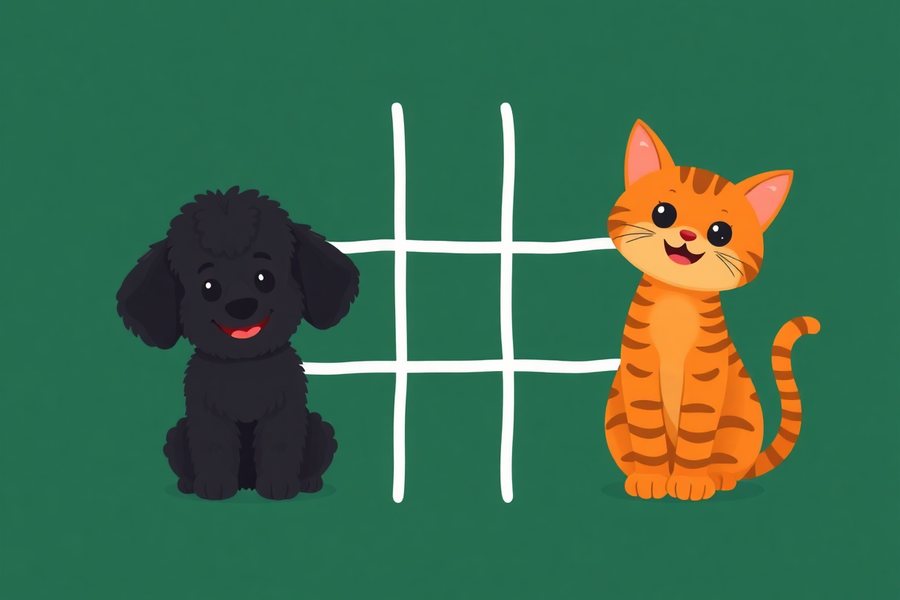
Tic-Tac-Toe
Maggie versus the cat. Play against someone else or the computer on Easy or Hard. Turn taking, planning, and a game that older players do not find babyish.
Play Tic-Tac-Toe →
Cause and Effect
Any tap, click, key or switch makes balloons, animals or Maggie appear. Three stages, from anything works to a single target.
Play Cause and Effect →
Sensory Games
Ripples, sparkles and slow colour washes that follow your finger, with a calm mode and nothing that flashes. No goal, just something that responds.
Open the Sensory Games →The short answer
Five free games and 13 free printable worksheets, most of them built around looking at pictures and matching them. The most useful one here is Match Words to Pictures, with the written words turned on, because that puts a photograph and its printed word side by side and asks the child to connect them.
Everything is untimed, nothing has to be dragged, a wrong answer is set aside rather than announced, and nothing on screen mentions an age.
Why visual activities tend to fit
There is a learning profile that comes up consistently in research and in practice, and although no profile describes any individual child, it is useful for choosing activities.
| Commonly described as a relative strength | Commonly described as a relative difficulty |
|---|---|
| Visual short-term memory: holding on to what has been seen. | Verbal short-term memory: holding on to what has been heard. |
| Learning from pictures, print, gesture and demonstration. | Learning from spoken instruction alone, especially several steps of it. |
| Understanding language, relative to producing it. | Expressive speech, and being understood by people outside the family. |
| Social understanding and reading a situation. | Fine and gross motor control, often with low muscle tone. |
The practical consequence is straightforward. An activity that depends on remembering a spoken instruction is working against the profile. An activity where the information is on the screen, stays on the screen, and can be looked at again is working with it.
That is exactly what a matching game is. The question is visible for as long as the child wants it, the options are visible next to it, and nothing has to be held in mind while a voice explains the rules.
Why to leave the written words switched on
This is the one page on the site where the usual advice is reversed. Elsewhere the suggestion is to start with the written words hidden and add them later. Here, turn them on early.
The reason is that print is a visual channel, and it is the channel that tends to be the stronger one. Whole-word reading, with a printed word shown alongside a picture, has long been used with children with Down syndrome not as a reward for having learned to speak but as a route in: written words are stable, they sit still, they can be looked at twice, and they do not disappear the moment they are said. Introducing vocabulary through print rather than only through speech is a well-established approach for exactly this reason.
So in Match Words to Pictures, leave the words showing. The child sees pig under the photograph of a pig, hears it, and matches it. Then use the direction toggle: the word appears first and the child finds the photograph that goes with it. Both directions are worth doing, and the second is closer to reading.
The settings to use
- Words: on. As above. Print is the point rather than the obstacle.
- Choices: start at two. Not because the child cannot handle more, but because succeeding first is what makes the next thing possible. Move to three when two is dull.
- Voice: on, unless hearing is difficult today. The spoken word alongside the printed word gives two routes to the same thing. But everything the game says is also shown, so nothing is lost if you play in silence.
- Bigger: worth trying. Larger targets help if fine motor control or vision is part of the picture, and there is no downside.
- Say the word out loud with them. The game gives the label; you repeating it turns a matching task into vocabulary practice.
- Short sessions. Two or three rounds while it is going well beats twenty that end in a battle.
On hearing specifically: fluctuating hearing is commonly part of the picture, and it is a good reason not to lean on the spoken instruction alone. Nothing here requires the audio. Every instruction is on screen as well.
Fine motor, and why nothing drags
Low muscle tone and fine motor difficulty are commonly described as part of the profile, and drag and drop is the interaction that punishes them hardest. It asks for a press, a sustained pressure, an accurate movement and a precise release, all four in sequence, and a slip at any point loses the answer.
A child who knows perfectly well which word goes with the pig can fail a dragging game repeatedly, and the game will record that as not knowing. So nothing on this site drags. Every answer is a single tap on a large target, and there is a Bigger toggle to make the targets larger still. The rest of the access decisions are here.
On paper
Beyond the screen, activities for children with Down syndrome lists what to do with the same learning profile using laundry, playdough, songs and cushions, sorted by the skill each one builds.
The same photographs come as free printable worksheets, which suits a child who does better away from a screen or who is working with an adult at a table. Two notes specific to this page:
- Cut the sheet into cards. Drawing a line between two columns is a fine motor task in its own right, and it is not the task you are practising. Cards turn the same sheet into a matching activity that needs no pencil at all.
- Start with the nursery sheet. Three pairs, printed large, and deliberately chosen so no two share a shape. The name on it describes the sheet, not who is allowed to use it.
What this is not
These are games and practice activities. They are not a reading programme, a therapy, an intervention, an assessment or a treatment, and they are made by one independent developer rather than a clinician or a researcher. The profile described above is a general pattern from the literature, not a description of your child, and the people who can tell you what will help your child are the ones who work with them.
Common questions
What kind of learning games suit a child with Down syndrome?
Visual ones, with the written word present rather than hidden. The learning profile is commonly described as having visual short-term memory as a relative strength and verbal short-term memory as a relative difficulty.
That points towards picture matching, whole-word reading and printed material, and away from activities that depend on following spoken instructions.
Should I turn the written words on or off?
On, in most cases, and this is the one place the usual advice here is reversed. Written words are widely used as a route into vocabulary for children with Down syndrome rather than something to be earned later, so showing the word next to the picture plays to the profile.
Why does no dragging matter?
Low muscle tone and fine motor difficulty are commonly part of the picture, and drag and drop asks for a sustained accurate movement with a precise release. A child who knows the answer can fail for reasons that have nothing to do with knowing it. Every answer here is a single tap.
Are these games a therapy or an intervention?
No. They are ordinary games and practice activities, made by an independent developer rather than a clinician. Not a reading programme, not an assessment, not a treatment.
My child has fluctuating hearing. Does that change the setup?
It is a good reason to show the written words and not rely on the spoken instruction. Everything the game says is also on screen, so a round stays completely playable with the sound off or on a bad hearing day.
My child is older than the pictures suggest. Will it feel babyish?
Nothing on screen states an age, and no game is labelled for a year group. The photographs are real animals and objects rather than cartoons, and the difficulty runs up to four similar choices with written words, which is genuine reading practice rather than a toddler screen.